
Lesson notes for online tutors: the complete guide
Good lesson notes help a student remember what happened, understand what improved, and know what to practice next. They also help the tutor start the next lesson with a clear purpose. The goal is not to preserve every minute. It is to preserve the parts that make the next learning decision easier.
This guide explains how to make lesson notes for tutors useful across language learning, academic subjects, practical skills, exam preparation, and coding. It covers what to include, what to keep private, how to show progress, and how to build a routine that survives a busy teaching week. The examples are illustrative, not records of actual students.
A good note can be brief without being vague. It can acknowledge difficulty without discouraging the learner. Most importantly, it should connect something observable from the lesson to a manageable next step. Start with that connection rather than a target number of paragraphs.
What lesson notes are, and what they are not
Lesson notes are a short, selective record of the learning that took place in a particular session. They usually describe the focus, evidence of achievement, important corrections, and the work to do next. Their value comes from the choices the tutor makes about what deserves attention.
A lesson plan looks forward. Lesson notes look back and then point forward. If you planned to practice persuasive writing but spent the session repairing paragraph structure, the notes should describe paragraph structure. Copying the original plan into the record hides what the student actually needed.
A transcript preserves spoken words in sequence. A useful lesson note organizes selected evidence around learning. A full transcript may contain repeated instructions, unfinished answers, and unrelated conversation. The student should not need to search through that material to discover the correction they need for homework.
Notes are also different from a formal assessment report. You can record a successful attempt without claiming that a skill is secure in every situation. Write that the student solved two supported examples accurately, rather than announcing mastery after a short activity. Accurate limits make later progress easier to recognize.
Why students, parents, and tutors need different things from the same record
For students: a route back into the learning
After a lesson, students need to retrieve the main idea without reconstructing the entire conversation. A clear example gives them a starting point. A specific practice task removes the guesswork about what counts as useful preparation. Both matter when the next lesson is several days away.
Notes can also make success visible to a student who remembers only the difficult moments. Describe the behavior that changed: you checked the denominator before adding, or you gave a reason before looking at the prompt. Evidence is easier to trust than a general statement about being talented.
For parents: an understandable account of the work
A parent may not recognize the exercise title or technical terminology. Explain the purpose in ordinary language. Instead of reporting only that you covered inference, explain that the student practiced using clues in a passage to support an answer that was not stated directly.
Parent-facing notes should distinguish lesson participation from independent performance. Completing a problem with a worked model nearby is useful progress, but it is different from completing it alone. Name the support and explain the next step. Keep the focus on learning rather than judgments about character or family routines.
For tutors: continuity and better decisions
Your future self needs to know where to restart. Notes reduce the chance of repeating an explanation that did not help or assigning work that was already completed. They also preserve the small details that can otherwise disappear between several students taught on the same day.
Over time, the record can reveal a pattern worth changing. Perhaps the student succeeds with diagrams but loses track during spoken explanations. Perhaps homework repeatedly depends on a resource they cannot locate. Use the notes to adjust the teaching, not simply to document the same obstacle every week.
What to include in useful lesson notes
Keep a stable set of headings so students know where to look. You do not need an equally long entry under every heading. One precise correction can be worth keeping when several smaller mistakes can wait. Include the date, subject, and student name or your usual student label so records remain distinguishable.
A summary of the actual learning
Write one or two sentences about the learning focus and the activity that made it visible. A topic alone is too broad. Fractions tells the reader little; comparing fractions with different denominators using a shared denominator gives a useful picture. Mention a change of direction if it affected the work.
For example: We compared fractions by rewriting them with a common denominator. You then explained why the fraction with the larger numerator was larger when the denominators matched. This records the concept, method, and student action without becoming a minute-by-minute diary.
Strengths and achievements with evidence
Name something the student did, then explain why it mattered. You used the opening sentence to predict the argument before reading the details is stronger than great reading. If help was needed, include it. Success after a prompt is still success, and the prompt helps you plan the next challenge.
Choose achievements connected to the learning goal rather than praise for compliance alone. Finishing a worksheet may matter, but identifying an error and correcting it independently gives a clearer learning signal. A quiet student can show careful thinking even when their answers are short.
Mistakes paired with corrections
Keep the original attempt when it helps the student see the difference. Put the corrected form beside it and add a short explanation. Avoid presenting the incorrect version by itself, especially when the student might later copy the note as a model.
For example: Original: She go to work yesterday. Correction: She went to work yesterday. Use the past form because yesterday places the action in the past. Then add a fresh practice cue, such as writing one sentence about last weekend. Select the correction that serves the current goal.
New vocabulary and key terms
Record terms that the student will need again, not every unfamiliar word that appeared. Give a plain definition and a meaningful example. For a language lesson, include a useful phrase rather than an isolated translation when context determines how the word is used.
For a science lesson, you might write: Variable: something that can change in an investigation. In our plant example, the amount of light was the variable we changed. This gives the student a usable meaning and connects it to the lesson they remember.
Homework with a clear finish line
State the task, the resource or exercise location, the expected output, and how to check it. Practice algebra is not an assignment. Complete problems 3 through 6 on the saved equation sheet, show each balancing step, and substitute your answer into the original equation is actionable.
Make the amount realistic and explain what to do when stuck. For example, attempt the first step, mark the point of uncertainty, and bring that attempt to the next lesson. A visible partial attempt gives you something to teach from. A vague demand to keep trying does not.
The next focus
Name the next teaching decision in a sentence. Next lesson, we will try the same comparison without the fraction strips tells the student how current work connects to future work. It also helps you distinguish planned practice from an unrelated new topic.
Treat that plan as provisional. If homework shows that the earlier step is unstable, return to it. Notes should support responsive teaching rather than create a promise to move forward regardless of what the student understands.
Private teaching observations in a separate place
Private notes can contain teaching reminders, tentative explanations for a difficulty, and questions you want to investigate. Keep them separate from the text intended for the student or parent. A private heading inside a shared document is not a reliable boundary.
Write private observations with the same care you bring to shared feedback. Record that the student lost their place during a dense example, not that they are careless. If an interpretation is uncertain, label it as a possibility and record what evidence you want to look for next time.
Separate student-facing notes from tutor-only notes
The student-facing record should answer three questions: what did I learn, what should I change, and what should I do next? It needs language the student can understand without your commentary. If a parent receives the same record, define any subject term that would otherwise obscure the message.
Tutor-only notes serve a different purpose. They help you plan prompts, revisit an unfinished question, or remember which explanation worked. They may include tentative teaching judgments that would confuse a student if presented as settled conclusions. Keep those judgments out of the shared summary.
Consider a student who pauses before starting written work. Shared note: You organized your answer successfully after making a three-point outline. Next time, use that outline before drafting. Private note: Compare a spoken rehearsal with a written outline next lesson to see which helps the student begin.
The shared version gives the learner a practical strategy. The private version gives the tutor a question to test. Neither needs a label about motivation. Separating the two audiences improves precision because you are no longer trying to make one paragraph do two different jobs.
Before sending, check the actual text that will reach the recipient. Do not rely on memory about where you wrote something. Keep student records distinct, check names and assignments, and remove any planning fragments that belong only in your teaching workspace.
Adapt the notes to the subject
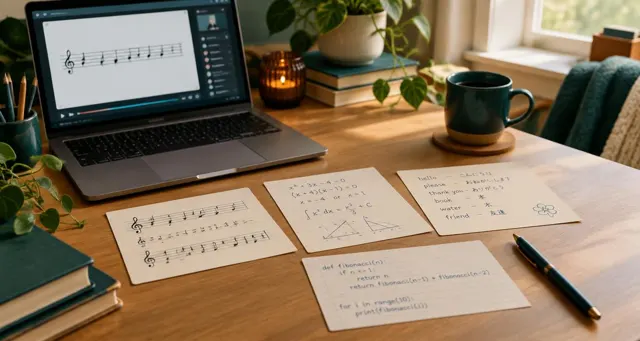
The structure can stay familiar while the evidence changes. In a language lesson, a corrected sentence may carry the main teaching point. In mathematics, the student may need a worked step. In coding, a short explanation of a failed test can be the most useful thing to preserve.
Language lessons: preserve usable language
Choose language that the learner can reuse in a similar situation. Include context, a correction, and a chance to retrieve the new form. If pronunciation was the focus, describe the sound or stress pattern in terms the student already knows. Avoid filling the note with technical labels introduced after the lesson.
Sample note excerpt: Today we practiced describing a completed trip. Strength: You gave the events in a clear order using first, then, and finally. Correction: I have visited Boston last year becomes I visited Boston last year because last year is a finished time. Useful phrase: The highlight of the trip was the museum. Homework: Record three sentences about a past trip. Next focus: Answer a follow-up question without a written script.
This excerpt does not try to correct every sentence from the conversation. It preserves the distinction the lesson targeted. If the student also struggled with articles, you can keep that observation in your planning record until it becomes a sensible teaching focus.
Skills lessons: name the process and the conditions
For a skill such as writing, reading, or presentation, record what the student did and under what conditions. A performance with a model, checklist, or rehearsal is different from a cold attempt. Describe the support so that later comparisons measure something recognizable.
Sample note excerpt: Today you revised a paragraph so the evidence supported the opening claim. Strength: You removed a detail that did not support your point. Correction: After the quotation, explain how it supports the claim rather than repeating the quotation. Homework: Revise the second paragraph using the same claim, evidence, explanation checklist. Next focus: Draft a paragraph without a completed model beside you.
If the work is practical, add the step where the process changed. A music student might have slowed a difficult transition before returning to the full phrase. A drawing student might have checked proportion before adding detail. The note should preserve the decision that made the practice productive.
Exam lessons: connect feedback to the task demand
Exam notes should identify the question type and the part of the response that needs attention. Separate subject knowledge from interpretation, method, timing, and checking. A wrong answer can arise from any of these. Naming the cause helps prevent an unhelpful assignment of unrelated revision.
Sample note excerpt: We practiced questions that require a supported comparison. Strength: You selected evidence for both texts. Correction: Your answer described each text separately but did not state the comparison. Add a sentence explaining the similarity or difference. Homework: Rewrite one response with the comparison stated in the opening sentence. Next focus: Choose relevant evidence within the practice time limit.
Use scoring language only when you have the relevant criteria in front of you. If you have not scored the work, describe the observed response rather than inventing a grade. Notes can still be useful without a number attached to every attempt.
Coding lessons: record reasoning, not just the finished code
A code snippet alone may not explain why the solution works. Preserve the problem, the mistaken assumption, the test that exposed it, and the change that fixed it. Keep snippets small enough that the student can connect them to the concept without navigating a whole project.
Sample note excerpt: We debugged a function that calculates an average. Strength: You tested an empty list before changing the calculation. Correction: Dividing by the list length fails when the length is zero. Handle that case before dividing. Homework: Add tests for an empty list, one value, and several values, then explain the expected result for each. Next focus: Decide what the function should return for an empty input.
A useful private reminder might be that the student predicted outputs accurately but needed help locating the failing branch. The student-facing task can then focus on tracing execution. Avoid claiming that completing one function demonstrates understanding of every related programming concept.
Use notes to show progress across lessons
Progress becomes easier to see when the same kind of evidence appears repeatedly. Choose a small number of indicators connected to the student’s goals. You might track independent starts, accuracy on a repeated question type, use of a target phrase, or the amount of support needed to complete a task.
Write a starting point with enough context to make comparison fair. Solved four equations independently is useful only if you also know what kind of equations they were. If the next lesson introduces fractions or negative numbers, a lower success rate may reflect a harder task rather than a backward step.
An illustrative speaking-share sequence
Imagine a conversation student whose share of lesson speaking time is recorded as 12%, 20%, 50%, and 75% across four lessons. These are illustrative sample figures, not measured outcomes or a promised pattern. They show how a sequence might prompt a useful discussion about participation.
The percentages alone do not establish learning. In one lesson, the tutor may have explained a new task for longer. In another, the student may have read a prepared passage aloud. Note the activity and whether the student was generating language, rehearsing, or reading. Compare similar tasks when possible.
A cautious progress note could say: Your speaking share increased across these practice conversations as the opening prompts became familiar. You also asked follow-up questions without a model in the latest conversation. Next, we will try an unfamiliar topic to see whether that independence carries over.
Do not turn speaking share into a target that overrides the lesson goal. Listening carefully can be part of valuable work. The useful question is whether the balance supported the intended practice, not whether every lesson reached the largest percentage in the sequence.
Track support as well as results
Add a short description such as with a worked example, after one prompt, or independently. A student who reaches the same answer with less support may be making meaningful progress even when the score stays unchanged. Keep these descriptions consistent enough that they mean the same thing next month.
At a regular review, choose an earlier example and a recent comparable example. Describe the difference, name what remains difficult, and set one next goal. A balanced review might say that the student now identifies the correct method independently but still makes sign errors when simplifying.
Let uneven progress inform the plan
Learning does not have to improve in a straight line to be real. A new context, a longer task, or a delay between practice attempts can reveal a gap. Record the conditions before interpreting the result. Avoid changing a student’s overall description because of one difficult session.
When a difficulty repeats, change something specific and record the change. Try a shorter example, a different representation, or a retrieval question at the start of the next lesson. The record then becomes a history of teaching decisions rather than a collection of repeated warnings.
When and how to send lesson notes
Write the first draft while the lesson is still clear in your memory. Review it before sending. A predictable schedule is usually easier to maintain than an ambitious promise you cannot keep. Tell students when to expect the notes and use that schedule consistently.
Choose one dependable place for student-facing records. Scattering homework across messages, documents, and spoken reminders makes it harder to know which instruction is current. If you revise an assignment, make the current version obvious and remove contradictory directions from the message that accompanies it.
Put the action near the top or under a heading the student recognizes. A student checking what to do before tomorrow’s lesson should not need to scan several paragraphs of general praise. Include the resource name or exercise location with the assignment instead of assuming the student remembers it.
When notes also go to a parent, write directly enough for the student to act and plainly enough for the parent to understand. Avoid giving the parent a second, incompatible homework instruction. If the two audiences need different detail, keep the central task and next focus consistent.
Before sending, read the note as if you had not attended the lesson. Can you identify the task, locate the material, and tell when it is complete? Check the correction itself, especially numbers, technical terms, and example sentences. A polished message still needs a factual review.
Choose a tone that is honest, specific, and kind
Use the student’s actions as the subject of feedback. You checked your answer by substituting it into the equation describes a repeatable strategy. You are a natural at math assigns a broad trait that does not tell the student what to repeat when the next problem becomes difficult.
Be direct about mistakes without making them sound permanent. The past-tense form was inconsistent during the story is a teachable observation. Your grammar is weak is a broad judgment. Pair the observation with the corrected form and a manageable practice task so the student has a way forward.
Keep praise proportionate. If the student needed several prompts, acknowledge the successful step and name the support. You found the relevant evidence after we compared two possible passages is both encouraging and accurate. It also creates a sensible next goal: making that comparison independently.
For younger students, keep sentences short and explain task words. For advanced students, preserve useful subject language without making the note sound like an examiner’s report. Match the complexity to the reader rather than using complicated wording to make the teaching appear substantial.
When a lesson was difficult, choose one genuine achievement and one priority. Do not manufacture praise, but do not send an inventory of everything that went wrong. A small, truthful success and a clear next action are usually easier to work with than a page of negative observations.
Paper, typed notes, and notes taken while you teach
Paper notes: quick capture with a later sorting step
Paper can work well for diagrams, brief marks, and a small number of teaching reminders. Its weakness is retrieval. If you choose paper, keep a dated page for each student and use consistent headings. Avoid placing several students’ observations together on an unstructured sheet.
Plan how the student-facing version will be produced. A photograph of a crowded page may preserve your handwriting without producing usable feedback. Transfer the selected summary, correction, and task into a clean message. Keep the rest as your own teaching record rather than sending everything you wrote.
Typed notes: reusable structure without copied assumptions
A typed template makes it easier to keep headings consistent and locate earlier work. Start each record with a clean structure. Copying the previous note and editing it can leave old names, dates, homework, or achievements behind. Check every field if you choose that method.
Typed notes can also become too long because adding another paragraph is easy. Review for duplication. If the summary, achievement, and next focus all repeat the same sentence, give each a distinct purpose. Structure should help the reader find information, not inflate the size of the record.
Live note-taking: capture anchors, not the whole lesson
When taking notes as you teach, write brief anchors at natural pauses: the original error, a successful strategy, and the next task. Avoid trying to transcribe the conversation while explaining a difficult concept. Divided attention can make it harder to notice the student’s reasoning.
Use a shorthand that you can reliably expand after the lesson. Mark uncertainty instead of turning a fragment into a confident statement later. If a detail cannot be reconstructed accurately, leave it out or describe only what you can verify. A shorter accurate record is preferable to an elaborate guess.
Build a weekly routine you can keep
A sustainable routine has a small after-lesson step and a separate weekly review. The immediate step protects accuracy. The weekly step helps you notice patterns and prepare the next sequence of teaching. Combining both into a single large writing session can make individual lessons harder to recall.
Before the teaching week
Prepare a blank note structure and check that each student has a distinct record. Review the latest homework and next focus before planning new material. Identify any resource that needs to be ready so the eventual assignment can name a real exercise rather than a placeholder.
Choose a modest progress indicator for students whose goals need a longer view. You do not need to track every possible skill. One recurring writing feature or one comparable speaking task may provide a clearer picture than a table full of inconsistent measurements.
After each lesson
Expand your brief observations into a summary, an evidence-based achievement, a selected correction, and a concrete task. Add key terms only when they will help with the next work. Write the next focus while the reason for that decision is still clear.
Then separate private planning remarks and check the student-facing text. Verify the example, the assignment location, and the recipient. Send the reviewed version according to your normal schedule. Treat drafting, reviewing, and sending as different steps even when they happen close together.
At the weekly review
Look across recent notes for repeated obstacles and unfinished tasks. If the same correction appears repeatedly, consider whether the practice needs to change. Repeating the same feedback is not the same as giving the student a new opportunity to understand it.
Check whether homework was used in the following lesson. If it repeatedly disappears from the teaching sequence, reduce or redesign it. Close the loop by acknowledging the attempt and using it to choose the next activity. Notes should describe a connected learning process, not isolated assignments.
Common mistakes that make lesson notes less useful
- Listing activities without the learning A note that says reading, discussion, worksheet does not show what changed. Add the strategy practiced or the decision the student learned to make. Keep activity names only when they help the student locate a resource or remember the context.
- Saving every mistake A long correction list can hide the priority. Choose mistakes related to the lesson goal or errors that block understanding. Keep other observations for planning. The student should be able to tell which correction deserves attention before the next lesson.
- Assigning vague homework Review today’s work leaves too many decisions unresolved. Name the task and expected output. If the student needs a recording, worksheet, or reading passage, give its exact location within the materials they already have.
- Treating support as failure A student may need a model before attempting a skill independently. Record the successful action and the support that enabled it. Then plan a smaller amount of support for a comparable task instead of describing the whole lesson as unsuccessful.
- Mixing observation with explanation The student stopped after the first step is an observation. The student did not care is an interpretation. Keep the record grounded in visible behavior and treat uncertain explanations as private questions to investigate through teaching.
- Letting a template replace judgment A template should remind you what to consider, not force an invented achievement or a correction that did not occur. Leave out an unnecessary category or state that the session focused on consolidation. Do not fill empty space with claims you cannot support.
- Sending without checking A wrong name or outdated assignment undermines an otherwise useful note. Read the final version, not just the draft you remember writing. Confirm that private remarks remain separate and that every correction shown to the student is accurate.
A final check before the note leaves your desk
Use a short review that checks meaning before appearance. First, compare the summary with the actual lesson. Does it describe work that happened, or only work you intended to cover? Then examine each achievement. The wording should name an observable action and should not imply independence when the student needed a model or prompt.
Next, test the correction from the student’s perspective. The corrected example should be accurate, and the explanation should use ideas already taught. If the correction introduces a new rule, decide whether the student needs a brief example now or whether that rule belongs in the next lesson. Do not turn the note into an unplanned textbook chapter.
Then check the homework against the materials. Open the exercise you named and confirm that the problem numbers and instructions match. Consider whether the student can begin without another explanation. If the assignment depends on a model, identify which model to consult. If the task has several parts, put them in the order the student should attempt them.
Finally, check the boundary between the shared record and your planning record. Remove tentative interpretations from the student-facing text. Confirm the recipient and date. Read the next focus once again to make sure it follows from the evidence you recorded. This review does not need elaborate formatting; it needs a repeatable sequence that catches the mistakes most likely to confuse the learner.
After sending, let the note do its job in the following lesson. Begin with a brief retrieval question or the assigned attempt rather than repeating the entire explanation. Notice what the student retained and what still needs support. That response gives you the evidence for the next note and keeps the written record connected to teaching.
How Jotmonk helps with the note-taking routine
Jotmonk™ records in the browser, with nothing to install and no bot joining the lesson. It records audio only. Tutor and student voices are kept separate, which helps keep each speaker’s contribution distinct when reviewing the lesson.
Jotmonk notes include a summary, strengths, mistakes, and homework, with the supporting quote. Treat a supporting quote as a place to check the evidence, not as a substitute for teaching judgment. Review whether the selected moment represents the learning point you want to preserve.
You review and edit before anything is sent. Check the meaning of corrections, the scope of achievements, and the homework instructions. Keep the final record focused on what the student needs next. Private notes never reach the student.
The tutor remains responsible for deciding what the lesson evidence means. A recorded exchange can preserve an important moment, but you still choose the priority, adjust the explanation to the student, and decide whether the next task is appropriate.
Continue with the right writing aid
For a step-by-step drafting process, use How to write lesson notes. It is the next place to turn when you know what happened in the lesson but need a method for turning observations into a clear, concise record.
For a closer look at recording an individual appointment, use Tutoring session notes. Keep the distinction practical: the session record captures what happened today, while the continuing lesson record helps you connect that work across several meetings.
Use the lesson notes template when you want a consistent starting structure. Adapt its headings to the subject and the student instead of treating every field as compulsory. Consult the glossary when a term needs clarification, then explain it in the student’s own learning context.
Frequently asked questions about lesson notes for tutors
How long should lesson notes be?
Long enough to preserve the important learning and make the next action clear. A focused lesson may need only a short summary, one achievement, one correction, and a task. A complex lesson may need additional examples. Judge length by whether the student can use the record without guessing, not by a fixed word target.
Should I send notes after every lesson?
A consistent record after each lesson can support continuity, especially when homework changes. The student-facing message does not need to be lengthy every time. For a session devoted to consolidation, identify what was practiced, how independently it was completed, and what should continue. Follow a sending schedule you can maintain.
What if the student made very little visible progress?
Record the work accurately and choose a manageable next step. You might note that the student completed the first stage with a model but still needed help choosing the next operation. Avoid claiming an achievement that did not happen. Use the record to decide how to change the explanation or practice conditions.
Do I need to correct every language mistake?
No. Select corrections that fit the lesson goal, affect meaning, or are ready for focused practice. Include the original form, the corrected form, and a short reason when useful. A smaller selection is easier to revisit. Keep other recurring patterns in your private planning record until they become a suitable focus.
Can the same note go to the student and a parent?
Yes, when the wording serves both audiences and the content belongs in a shared record. Write the learning point plainly, distinguish supported from independent work, and make the homework actionable. Keep private teaching observations separate. If you produce different versions, check that the task and next focus agree.
How can I show progress without giving a score?
Compare the student’s work under similar conditions. Describe changes in accuracy, explanation, independence, or the support needed. Preserve an earlier example and a recent example when practical. A statement about solving a comparable problem with fewer prompts can communicate progress without converting every lesson into a numerical assessment.
What should I keep only in private tutor notes?
Keep planning questions, tentative interpretations, reminders about teaching approaches, and details that do not belong in the student-facing learning record. Write them factually and store them separately. Private notes should help you make a better teaching decision, not become a place for broad judgments about the student.
What is the simplest routine to start with?
After the lesson, write what you practiced, one specific success, one correction, and the next task. Add a private reminder separately if needed. Review the shared text before sending it. At the next lesson, return to the task and use the result to choose what comes next. Expand the routine only when a new heading solves a real problem.