Lesson notes examples you can adapt today
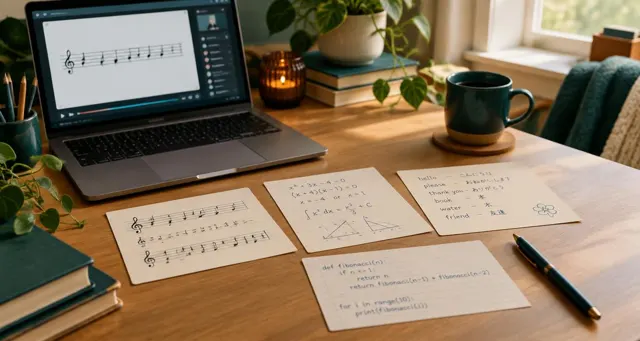
The fastest way to write better lesson notes is to see good ones. This article gives full lesson notes examples for eight kinds of online lessons: English conversation, exam English, Spanish for beginners, school math, exam science, piano, coding and a practical skills session. Each example uses the same five parts, so you can compare them side by side and copy the pattern that fits your teaching.
Every example is illustrative. The students, scores and details are invented to show the shape of a useful note, not taken from real lessons. Change the names, the level and the subject details, and keep the structure.
Under each example you will find a short explanation of why it works and what to change for a weaker or stronger student. If you only have two minutes, read the example closest to your subject and the section on common patterns near the end.
The five parts every example uses
Before the examples, here is the structure they share. It comes from the complete guide to lesson notes for online tutors, where each part is explained in depth. In short, a lesson note answers five questions the student will have after the call ends.
- What we covered. Two or three sentences in plain words. The topic, the activity and the context.
- What went well. One or two specific strengths, with the evidence that shows them.
- What to fix. The most important mistakes or gaps, each with the better version written out.
- Homework. One to three tasks, each with a clear finish line the student can recognize.
- Next focus. Where the next lesson starts, so the student arrives ready and you start with purpose.
Example 1: adult English conversation lesson
Context: an intermediate adult learner who wants to speak more confidently in work meetings. The lesson was forty-five minutes of conversation about a recent project, with corrections collected along the way.
The note
- What we covered: We talked about your team's product launch and practiced describing problems and solutions in a meeting. We also reviewed how to interrupt politely.
- What went well: You explained the delay in the launch clearly and in the right order: problem, cause, plan. You used "as a result" and "so far" naturally three times.
- What to fix: "I am working here since 2021" becomes "I have worked here since 2021." "We discussed about the budget" becomes "We discussed the budget." "Can I say something?" is fine, and "Sorry to jump in, but..." sounds more natural in meetings.
- Homework: Record a two-minute voice message describing one problem at work and how your team solved it. Use "since" with the present perfect at least twice.
- Next focus: Disagreeing politely in meetings. Bring one real situation where you wanted to disagree and did not.
Why it works
The strengths are tied to evidence the student will recognize. The corrections show the exact sentence the student said and the better version, which is far more useful than "work on the present perfect." The homework uses the same grammar point in a real context, so practice transfers to meetings.
For a weaker student, cut the fixes to one and make the homework shorter. For a stronger student, add a stretch task such as using two softening phrases when disagreeing.
Example 2: exam English (IELTS speaking)
Context: a student preparing for IELTS speaking, aiming for band 7. The lesson was a full mock of Part 2 and Part 3 with feedback afterwards.
The note
- What we covered: A full Part 2 mock on "a place you would like to visit" and six Part 3 questions about tourism.
- What went well: You spoke for the full two minutes in Part 2 without long pauses. Your Part 3 answers gave a reason and an example most of the time, which is what examiners look for.
- What to fix: You repeated "very beautiful" four times. Try "stunning," "breathtaking" or describe one detail instead. In Part 3 your answers were short when the question was abstract. Use the pattern: opinion, reason, example, contrast.
- Homework: Answer three Part 3 questions from the list we shared, recording each one. Use the four-step pattern and check that each answer is at least forty seconds.
- Next focus: Fluency under pressure. We will do two Part 2 topics with only thirty seconds of preparation.
Why it works
Exam students want to know how close they are to the score. This note names the criteria the examiner uses, such as reasons and examples, without promising a band. The fix gives a reusable pattern instead of a vague instruction to "say more."
If the student has an exam date soon, add the number of lessons left and what each will cover. It turns a single note into a plan.
Example 3: Spanish for a beginner
Context: a complete beginner in their fifth lesson. The aim was ordering food and drinks and using basic numbers.
The note
- What we covered: Ordering in a café: "Quisiera...", "¿Cuánto cuesta?" and numbers from one to twenty. We role-played two orders.
- What went well: Your pronunciation of "quisiera" was clear from the first try. You remembered all the numbers up to ten without looking.
- What to fix: "Un agua" is correct, even though agua is feminine. "Una café" becomes "un café." Numbers eleven to fifteen need more practice: once, doce, trece, catorce, quince.
- Homework: Say the numbers one to twenty out loud twice a day. Write three café orders using "quisiera" and a price.
- Next focus: Asking for the bill and paying, plus numbers up to one hundred.
Why it works
Beginners need confidence as much as correction. The note leads with two real wins and keeps the fixes small and concrete. The homework is short and daily, which suits early learners better than one long task.
Keep notes for beginners very short. Long notes can feel like a list of failures at this stage.
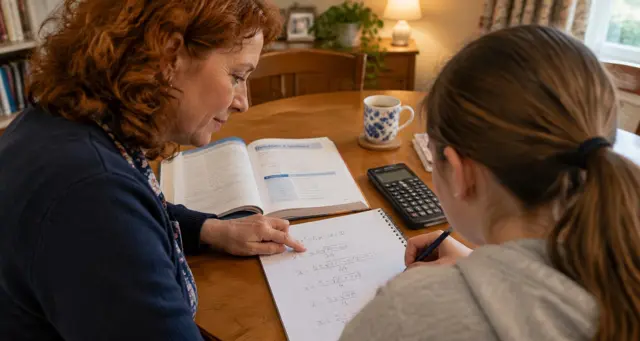
Example 4: school math (algebra)
Context: a fourteen-year-old student struggling with solving linear equations. A parent reads the notes too.
The note
- What we covered: Solving equations with the unknown on both sides, such as 3x + 5 = x + 13. We worked through eight examples together and two on your own.
- What went well: You solved both independent questions correctly. You now move terms across the equals sign without being reminded to change the sign.
- What to fix: When there are brackets, expand them first. In 2(x + 3) = 14 you wrote 2x + 3. The correct step is 2x + 6 = 14. Check each answer by putting it back into the original equation.
- Homework: Questions 1 to 10 on the worksheet. Check every answer by substitution and circle any that do not work.
- Next focus: Equations with brackets on both sides, then simple word problems.
Why it works
The note shows a parent clear evidence of progress: two questions solved independently. The fix includes the student's actual mistake and the correct step, which makes the error easy to spot next time. The self-checking habit in the homework builds independence.
For younger students, use simpler language and fewer numbers in the note. For parents who want more detail, keep a separate summary rather than making the student's note longer.
Example 5: exam science (GCSE chemistry)
Context: a student revising for GCSE chemistry, three months before the exam. The topic was rates of reaction.
The note
- What we covered: The four factors that affect rate of reaction and collision theory. We did two six-mark exam questions.
- What went well: Your explanation of temperature using collision theory was complete. You mentioned both more frequent collisions and more energetic collisions.
- What to fix: For surface area, you said particles "move faster." They do not. A larger surface area means more particles are exposed, so there are more frequent collisions. In six-mark questions, use the words "frequency of successful collisions."
- Homework: Write a model answer for the six-mark question on concentration. Then mark it against the mark scheme we used and note any missing points.
- Next focus: Required practical on rates, including how to read results tables and graphs.
Why it works
Science mistakes are often misconceptions rather than slips. Naming the exact misconception and the correct idea stops it from returning in the exam. Self-marking against a mark scheme teaches the student what examiners reward.
Example 6: piano lesson
Context: an adult learner at grade 2 level, working on a short classical piece. The lesson was online, with the camera on the hands.
The note
- What we covered: Bars 1 to 16 of the minuet, hands separately and then together at a slow tempo. A short scale warm-up in G major.
- What went well: Your left hand in bars 1 to 8 is now steady at 60 beats per minute. Your wrist stays relaxed during the scale.
- What to fix: In bar 9, use finger 3 on the F sharp, not finger 2. It makes bar 10 much easier. You speed up when the right hand has quavers. Use the metronome at 56 for those bars.
- Homework: Fifteen minutes a day: G major scale twice, then bars 9 to 12 hands together at 56, five times without stopping.
- Next focus: Bars 17 to 24 and adding dynamics to the first section.
Why it works
Music practice fails when the student does not know exactly what to practice or how slowly. This note gives bar numbers, fingerings and tempos, so a practice session can start without guesswork.
Example 7: coding lesson (Python)
Context: a career changer learning Python, working on a small project that reads a spreadsheet of expenses.
The note
- What we covered: Reading a CSV file, looping through rows and adding up expenses by category using a dictionary.
- What went well: You wrote the loop yourself and explained what each line does. You used a dictionary without prompting, which is the right tool here.
- What to fix: Amounts were read as text, so "12" + "8" gave "128." Convert with float(row["amount"]) before adding. Name variables for what they hold: totals_by_category instead of d.
- Homework: Add a function that prints the three biggest categories. Push your code to the repository before the next lesson.
- Next focus: Writing tests for your function and handling rows with missing amounts.
Why it works
Coding students benefit from notes that show the exact line to change. The fix explains the cause of the bug, not only the solution, which builds debugging skill. Asking for the code before the next lesson lets the tutor prepare.
Example 8: practical skills session (marketing)
Context: a small business owner learning to write product descriptions for an online shop. The session was a one-to-one coaching call.
The note
- What we covered: What makes a product description sell: who it is for, the main benefit, and the details that answer common questions. We rewrote two of your descriptions together.
- What went well: Your rewritten candle description opens with the customer's moment, "for slow Sunday mornings," instead of the wax type. It reads much warmer.
- What to fix: Your descriptions list features without saying why they matter. "Soy wax" becomes "soy wax that burns clean for up to 40 hours." Keep the first sentence under twenty words.
- Homework: Rewrite five more descriptions using the three-part pattern. Mark the benefit in each one.
- Next focus: Product titles and the first line that shows in search results.
Why it works
Skills coaching often produces work the student can use immediately. This note shows before and after examples from the student's own shop, which makes the lesson concrete and easy to repeat.
Example 9: business English email writing
Context: an upper-intermediate learner who writes client emails every day and wants them to sound less stiff.
The note
- What we covered: Rewriting three of your recent client emails to sound clear and friendly. We looked at openings, requests and closings.
- What went well: Your rewritten request, "Could you send the signed contract by Friday?", is direct and polite. You cut the second email from 180 words to 90 without losing anything important.
- What to fix: "Please do the needful" sounds unclear to many readers. Say exactly what you need: "Please confirm the delivery date." Avoid starting with "I am writing to inform you that"; start with the news itself.
- Homework: Rewrite two emails from this week using the pattern: news, request, deadline, thanks. Keep each under 120 words.
- Next focus: Writing emails that say no or deliver bad news politely.
Why it works
The student brings real work, so every correction pays off the same day. The pattern in the homework is simple enough to use under time pressure at work.
For a stronger student, add tone: how to sound warmer with long-term clients and more formal with new ones.
Example 10: a lesson that did not go to plan
Not every lesson goes well. Notes after a difficult lesson matter even more, because the student may leave feeling discouraged. Context: a teenage student preparing for a math test who arrived tired and struggled with every question.
The note
- What we covered: We started on simultaneous equations and then went back to solving single equations, which we will build on.
- What went well: You kept going after the first two questions felt hard, and you solved the last single equation without help.
- What to fix: Simultaneous equations need a strong base in single equations. That is normal, and it is where we will start next time.
- Homework: Five single equations from the sheet. Only five. Check each by substitution.
- Next focus: A quick warm-up of single equations, then one simultaneous equation step by step together.
Why it works
The note is honest without being harsh. It reframes going back as a plan rather than a failure, finds a real win, and makes the homework small enough to finish. A student who feels capable comes back; a student who feels judged often does not.
Keep your own reflections on why the lesson was hard, such as tiredness or a mismatch in level, in your private notes rather than in the student's note.
Patterns that make every example work
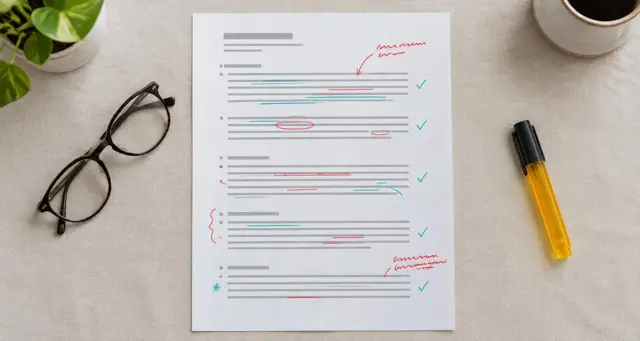
Look across the eight examples and the same habits appear. These are what turn a lesson record into a note that students read and act on.
- Evidence, not adjectives. "You solved both independent questions" says more than "great work today."
- The student's own words or work. Corrections show what the student actually said or wrote, then the better version.
- One main fix. Two or three at most. A long list hides the one that matters.
- Homework with a finish line. A number of questions, a time, a recording length. The student knows when they are done.
- A next focus. It links this lesson to the next and gives the student a reason to come back.
- Written to the student. "You" instead of "the student." Notes about someone read like a report card.
How to adapt an example for your student
Start from the example closest to your subject, then adjust three things: length, tone and audience.
Length
Beginners and young learners need shorter notes. Exam students and adults working toward a goal often want more detail. A good rule is that the student should be able to read the note in under two minutes.
Tone
Match the relationship. A note to an adult professional can be direct. A note to a nervous teenager should lead with wins and frame fixes as next steps. Kind and specific always beats vague and cheerful.
Audience
When a parent reads the notes, add one line on progress toward the goal and avoid jargon. Keep anything you only need for yourself, such as a hunch about motivation, in a separate private note. The article on tutor-only notes and student notes explains how to split them.
Weak and strong versions side by side
The difference between a note that gets ignored and one that gets used is usually small. Here are three common weak lines and their stronger versions.
- Weak: "Good lesson, keep practicing." Strong: "You held a five-minute conversation about your weekend without switching to English. Practice the past tense of ir and ser before Thursday."
- Weak: "Watch your grammar." Strong: "'She go to work' becomes 'She goes to work.' Add -s for he, she and it in the present simple."
- Weak: "Do some revision." Strong: "Complete questions 4 to 9 on page 32 and check your answers with the key."
Keeping examples consistent across many students
If you teach twenty or thirty students a week, consistency matters more than perfect wording. Use the same five headings every time so students know where to look, and so you can compare notes across lessons to see progress.
Many tutors keep a short bank of phrases for common corrections in their subject. It saves time without making notes generic, as long as each note still includes the student's own example.
Writing these by hand after every lesson takes time. Jotmonk records the lesson, keeps the tutor's and the student's voices apart, and writes notes in this five-part shape for you to review and send.
Questions tutors ask about lesson notes examples
How long should a lesson note be?
Most good notes are between 80 and 200 words. Long enough to be specific, short enough to read in a couple of minutes.
Should every note include homework?
Not always. If there is no homework, say so and name what the next lesson will start with, so the student is not left guessing.
Can I reuse the same note for several students?
You can reuse the structure and some phrases, but every note needs the student's own evidence. Students notice copy-and-paste notes quickly.
Where should I send lesson notes?
Wherever the student already reads messages from you, such as email or the platform's message area. Consistency matters more than the channel.