Private tutor notes and student notes are two different documents
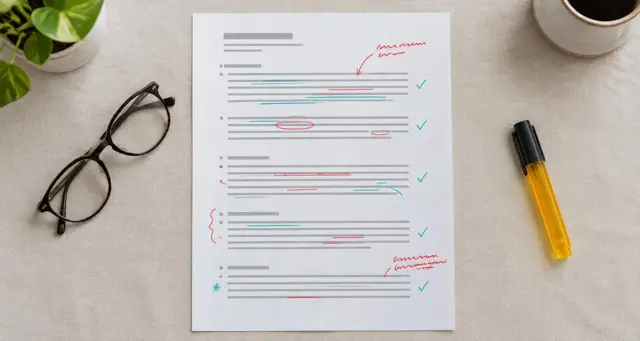
After a lesson, most tutors write one note. It mixes what the student needs to read with what the tutor needs to remember: a correction, a reminder to slow down, a guess about why the student seemed tired. That single note ends up too private to send and too messy to use.
The fix is simple. Keep two notes. The student note is short, kind and practical, written to the student. The private tutor note is your working file: honest, quick and only for you. This article explains what goes in each, how to keep them apart without doubling your work, and how private notes make you a better teacher over months, not just lessons.
What a student note is for
A student note helps the student remember what happened, see what improved and know what to do next. It is written in the second person, with evidence the student will recognize, and it ends with a clear next step.
Everything in a student note should pass one test: would you be comfortable if the student, or their parent, read it aloud? If the answer is no, the line belongs in your private notes.
- What we covered. The topic and activity in plain words.
- What went well. Specific strengths with evidence.
- What to fix. The main mistakes with the better version written out.
- Homework. Tasks with a clear finish line.
- Next focus. Where the next lesson starts.
What a private tutor note is for
A private note helps you teach the next lesson better. It records what you noticed, what you suspect and what you want to try. It can be blunt, incomplete and full of abbreviations. Nobody else reads it.
Good private notes answer questions like these: What did I plan, and what did we actually do? What surprised me? Which explanation worked, and which fell flat? What do I want to check next time? Is anything outside the lesson affecting progress?
What belongs in private notes
Teaching observations
Which activity worked, which did not, and why you think so. "Visual timeline helped with past tenses, verbal explanation did not" is gold three lessons later when the same problem returns.
Patterns you are not ready to share
You may notice a mistake three times before you are sure it is a pattern. Record it privately first. Once it is clear, move it to the student note with a fix.
Motivation and mood
"Quiet today, mentioned work stress" helps you adjust the next lesson's pace. It does not belong in a note the student reads, where it might feel like a judgment.
Logistics and business
Package balance, rescheduling, a parent's request, a payment reminder. These matter to you, but they clutter the learning record.
Ideas for future lessons
A video to share, a game to try, a topic the student mentioned they care about. Private notes are where lesson plans start.
What never belongs in either note
Some things should not be written down at all. Avoid diagnosing learning difficulties or health conditions; you can note what you observe, such as "struggled to focus after twenty minutes," without labeling it. Avoid comments about family, appearance or personal life that are not relevant to learning. Write as if your notes could be read later by the student, a parent or a school, because sometimes they are.
If you teach children and notice a safeguarding concern, follow the reporting procedures of your platform, school or local authority rather than recording it in ordinary lesson notes.
A side-by-side example
Here is one English lesson written both ways. The student is an adult preparing for job interviews.
Student note
- What we covered: Answering "Tell me about yourself" and "Why do you want this role?" We practiced each answer three times.
- What went well: Your third answer to "Tell me about yourself" was under ninety seconds and ended with why you want this job. That is exactly the shape interviewers like.
- What to fix: "I am responsible of the team" becomes "I am responsible for the team." Slow down in the first sentence; it sets the tone.
- Homework: Record your answer to "What is your biggest strength?" twice, once with notes and once without.
- Next focus: Answering questions about weaknesses and gaps in your CV.
Private tutor note
- Plan vs reality: Planned three questions, did two. First answer took twelve minutes to settle; nerves high.
- What worked: Timing each answer with a visible timer calmed her. Use again.
- Watch: Prepositions after adjectives (responsible of, good in). Third lesson in a row. Ready to make it a focus.
- Context: Interview is in two weeks. Mentioned she hasn't interviewed in eight years.
- Next time: Open with a quick win (repeat best answer) before weaknesses question. Prepare preposition mini-drill.
What the comparison shows
The student note is encouraging and actionable. The private note captures nerves, a recurring pattern and a teaching choice to repeat. Merging them would have either exposed the student's anxiety in writing or lost the observations that shape the next lesson.
How private notes turn into progress
Private notes are most useful when you read them back. Before each lesson, spend two minutes on the last two private notes for that student. You will start with a plan instead of "So, how was your week?"
Every month or so, scan a student's private notes from start to finish. Patterns appear that no single lesson shows: the mistake that keeps coming back, the activity that always works, the moment motivation dipped. These patterns make your progress reports honest and specific.
When a private observation becomes useful to the student, promote it. "Watch prepositions after adjectives" becomes a fix in the student note, with examples and a short drill. That is how private notes feed the student's learning without exposing your working thoughts.
Keeping two notes without doubling your work
The worry is time. Two notes sound like twice the effort. In practice, private notes are short, often five lines of shorthand, and they make the student note faster because you are not deciding what to leave out as you write.
Write the private note first
Straight after the lesson, dump everything into the private note in a minute or two. Then write the student note from it, choosing only what the student needs.
Use fixed headings
Plan vs reality, what worked, watch, context, next time. Fixed headings mean you never stare at a blank page.
Keep them in different places
A separate document, a separate section in your tutoring app, or a separate notebook. The point is that the private note can never be sent by accident.
Let tools carry the first draft
Jotmonk records the lesson, keeps the tutor's and the student's voices apart and writes the student-facing notes for you to review and send. Your own working notes stay on your side, separate from what the student receives.
Privacy and storage habits
Private notes still contain information about real people, so treat them carefully. Store them somewhere only you can access, with a password and two-step sign-in where possible. Avoid writing full names in loose files; initials or a student code are enough.
Keep notes only as long as you need them for teaching. When a student stops lessons, decide how long you will keep their records and delete them after that. If a student or parent asks what you hold about them, you should be able to answer clearly.
If you work through a platform or a tutoring school, check their rules on notes and records. Some require notes to stay inside their system.
Private notes for different kinds of tutoring
Language tutors
Track recurring mistakes, vocabulary the student reaches for and avoids, and how much the student speaks compared with you. Speaking share is one of the clearest signs of progress in conversation lessons.
Exam tutors
Track which question types lose marks, time management and exam nerves. Note the exam date and the topics left to cover.
Music and skills tutors
Track technique habits, practice consistency and which explanations or demonstrations worked. Note what the student practiced versus what you assigned.
Tutors working with children
Track engagement, what parents have asked for and anything agreed with the parent. Keep observations factual and neutral.
Why the split matters for the student
Students read lesson notes to feel progress and know what to do. When a note mixes in the tutor's doubts, logistics and half-formed guesses, the useful parts get buried. Worse, a student who reads "seemed unmotivated" about themselves may lose confidence or trust.
A clean student note signals care. It shows you listened closely, chose what mattered and wrote it for them. That is one of the strongest reasons students stay with the same tutor for months or years.
Parents notice the difference too. A short, specific note that a parent can read in a minute builds trust far faster than a long one full of the tutor's working thoughts.
Why the split matters for you
Private notes are where you get better as a teacher. They record what you tried and how it landed, which is the evidence you need to improve your explanations and your lesson design.
They also protect your time. When a student reschedules, returns after a break or asks for a progress update, your private notes hold the context you would otherwise have to rebuild from memory.
Finally, they make handovers possible. If you ever pass a student to a colleague or a cover tutor, clean student notes plus a short summary from your private notes give the next tutor a clear start.
A simple private note template
Copy these five headings into whatever you use for notes. Fill each with one line after every lesson. It takes about a minute.
- Plan vs reality: What you planned and what actually happened.
- What worked: One explanation, activity or example worth repeating.
- Watch: A mistake or habit you have seen before, with a count if you have one.
- Context: Anything outside the lesson that affects learning, written neutrally.
- Next time: One thing to start with or try in the next lesson.
Turning a month of private notes into a progress update
Many tutors are asked for a progress update by a student or a parent, often without warning. With private notes, it takes ten minutes.
Read the last four to eight private notes for the student. List the "watch" items and cross out the ones that no longer appear. Those are progress. Circle the ones that keep returning. Those are the next goals. Then read the student notes for the same lessons to collect the strongest examples of achievement.
Write the update in three short parts: what has improved, with one example; what you are working on next, with why; and what the student can do between lessons. Keep the private observations private, and use only what is fair and useful to share.
For language students, one of the clearest progress signs is how much they speak compared with you. If a student went from speaking a small share of the lesson to most of it, that is progress they can see and feel.
Private notes when you teach many students
With thirty or more students a week, memory is not enough. Private notes are what keep each student's story separate in your head.
Batch the reading, not the writing. Write each private note immediately after the lesson, while it is fresh. Then, at the start of each teaching day, skim the private notes for everyone you will see. Five minutes in the morning saves several awkward starts later.
Use the same headings for every student so you can scan quickly. Mark anything urgent, such as an exam date or a parent request, so it stands out.
Common mistakes with private notes
- Writing only private notes. The student never receives a record, and the lesson fades for them.
- Writing private notes in the student's document. Sooner or later, something meant for you gets sent.
- Never reading them back. Notes nobody reads are just a diary. Read the last two before each lesson.
- Writing judgments instead of observations. "Lazy" helps nobody. "Didn't do the homework for the third week; said work is busy" helps you plan.
- Keeping everything forever. Decide how long you keep records and delete old ones.
Questions tutors ask about private notes
Should students ever see my private notes?
Write them as if a student might one day ask, but they are your working notes. If a student asks what you record about them, be open about it and share what is relevant.
How long should a private note be?
Usually three to six lines. Shorthand is fine as long as you can understand it a month later.
Do I need private notes for every lesson?
A quick line for every lesson is better than detailed notes occasionally. Consistency is what reveals patterns.
Where does a progress report come from?
From both. The student notes show what was taught and achieved. The private notes show patterns and context that make the report honest.