Write exam-prep notes that change the next practice task
Lesson notes for exam prep should explain where performance broke down and what the student will try next. "Practiced algebra" is too broad to guide revision. "Chose the correct method but lost the negative sign when expanding brackets" gives the student a specific action. The best note connects a question, an observed response, and a next check.
Keep the exam specification and official mark scheme beside your teaching record when they are relevant. Do not rely on memory for exact requirements. The examples here are fictional and do not describe an official exam board's marking rules. Use the lesson notes guide for the wider structure, then add the task conditions that make exam practice interpretable.
Record the question reference and conditions
Write the paper or resource name, question number, topic, and conditions. Was the attempt timed? Did the student use notes? Did you give a hint? Were they answering an unfamiliar question or repeating a corrected example? These details matter because an apparently stronger result may reflect extra support rather than independent improvement.
Keep resource references precise enough to find again. If you used your own question, save it with a clear label in your teaching materials. A note that says "redo the hard one" becomes useless when several worksheets look similar. You do not need to copy a full paper into the recap. A stable reference and the relevant working step usually provide enough context.
Distinguish knowledge from execution
Before choosing homework, decide what kind of difficulty you observed. The student may not know the concept, may choose the wrong method, may misread the instruction, or may make an execution error after choosing correctly. These categories are working descriptions, not labels attached permanently to the student. A later attempt may show a different cause.
For example, a student who cannot explain why a denominator must stay unchanged needs different practice from one who understands the rule but copies a number incorrectly. Write the evidence before the interpretation: "Changed the denominator while simplifying; could not explain the equivalence." That gives you a stronger basis for revisiting the concept than simply writing "careless fractions mistakes."
Capture a correction the student can reuse
Show the wrong step and the corrected step when the difference is small enough to display clearly. Add a short explanation of the decision. In math, that might be why both sides need the same operation. In writing, it might be why the evidence does not support the paragraph's claim. Keep the correction tied to the actual question.
Do not turn every note into a complete textbook explanation. Select the point that will help the next attempt. If several errors follow from one early misunderstanding, address that first rather than assigning a separate task for every later line. The student should be able to identify the correction quickly when they open the note during independent revision.
A worked math lesson note
Here is a fictional record: "Goal: solve equations with brackets. Task: tutor worksheet B, questions 3 to 6, untimed. Achievement: selected expansion before collecting terms on the final question without a hint. Main difficulty: wrote minus two times minus three as minus six. Correction: the product is plus six. Check the sign before collecting terms."
Continue with the practice plan: "Homework: redo questions 4 and 6, showing the expansion on a separate line. Check each solution by substitution. Next lesson: begin with one new equation without the worked example." This note separates a successful decision from a remaining error. It does not claim the whole topic is secure because the final answer was correct once.
A worked essay lesson note
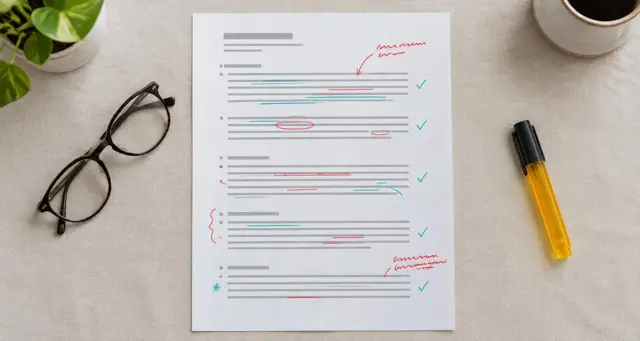
A fictional writing record might say: "Goal: build a paragraph that answers the question directly. Task: one untimed paragraph using the supplied passage. Achievement: chose a relevant quotation independently. Main difficulty: the explanation described the quotation but did not show how it supported the point. Correction: add a sentence explaining the connection to the question."
Then specify the revision: "Homework: rewrite the explanation in the marked paragraph. Keep the original quotation. Underline the sentence that connects the evidence to the claim. Next lesson: write a new paragraph with a different passage." Check any exam-specific terminology against the official guidance. Do not turn a tutoring observation into an invented grade or assume the same paragraph structure fits every subject.
Use timed practice without losing the learning detail
When timing matters, record the time limit and what the student completed. Also record where time went if you observed it: reading, choosing a method, drafting, or checking. A final score alone may hide a useful teaching decision. A student who rushes the last question needs a different plan from one who spends too long rewriting an already adequate answer.
Keep practice results separate from predictions. One timed attempt does not establish a future exam result. Compare similar tasks and note differences in difficulty or support. If the student becomes more accurate when the timer is removed, that tells you something worth investigating. It does not automatically tell you whether the next step should be faster practice or more work on the underlying skill.
Turn repeated errors into a small revision plan
At a review point, scan recent notes for repeated patterns. Group related errors and choose one or two priorities. A revision list with twenty unrelated weaknesses can be hard to act on. A focused plan might pair a concept review with a short independent question and a checking routine. State what would count as improvement in the next attempt.
Revisit a corrected skill using a new question, not only the original exercise. Repeating the same answer can show recall of the correction without showing transfer. Record whether the student needed a prompt on the fresh task. If the same difficulty returns, change the explanation or reduce the task complexity before assigning a larger volume of similar questions.
Review any draft against the written work
Jotmonk™ notes include a summary, mistakes, strengths and achievements, and homework, with supporting quotes. You review, edit, and approve before anything is sent. For exam prep, spoken evidence should still be checked against the question and written working. Do not assume an audio-based note contains every diagram, symbol, or handwritten change. Jotmonk™ is at the waitlist stage.
The lesson summaries feature describes the student-facing record. The AI note takers comparison for tutors can help you consider ways to keep that record. Whatever tool you choose, finish the review with three checks: the question reference is correct, the correction is accurate, and the homework tests the intended skill. Those details make the note useful when revision begins.
Before the next lesson, select the fresh question you will use to check the correction. Make sure it tests the same skill without simply copying the original numbers or wording. Decide what support you will offer and record that choice. This turns the previous note into an actual teaching plan rather than leaving the revision task disconnected from your next session.