
Lesson feedback for online tutors: the complete guide
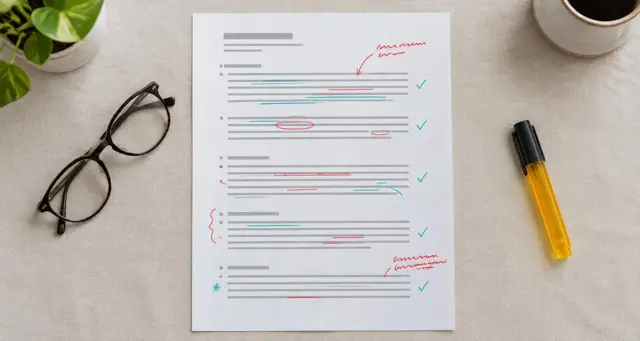
Useful lesson feedback helps a student understand what happened in a lesson and what to do next. It connects an observation to a practical decision. A student should be able to read the note, recognize a moment from the session, and start a suitable practice task without decoding a page of teaching terminology. The note should also help the tutor plan the next meeting.
Online tutoring makes this connection especially important. A shared screen disappears when the call ends. A correction in chat may sit among scheduling messages. A student may remember that something was difficult without remembering the explanation that made it easier. Written feedback preserves the small amount of information worth carrying forward. It is not a transcript or a record of everything the tutor noticed.
This guide covers spoken correction, written notes, subject differences, and the route from feedback to independent practice. The examples are illustrative teaching situations rather than reports of measured outcomes. Adapt their level, wording, and workload to the actual student. A reliable feedback routine needs careful judgment more than elaborate formatting, and it should remain manageable enough to use after an ordinary teaching day.
What makes feedback useful rather than merely positive
Feedback is useful when it answers three questions: What can I do now? What needs attention? What should I try next? These questions create a learning direction without turning every lesson into an assessment. A student who receives only encouragement has no clear next move. A student who receives only errors may not recognize which successful habits to repeat.
Compare “Good work on fractions” with “You used equal-sized parts to explain why one half equals two quarters.” The second statement identifies a visible action. It also gives the student a method to reuse. Add a next step if one is needed: “Next, draw equal-sized parts before comparing one third with one quarter.” The praise and the correction now support the same learning goal.
Keep claims close to the evidence. Solving a problem after a worked example does not establish independent mastery. Speaking readily about a familiar hobby does not establish comfort with every topic. Say what happened under the conditions you observed. A phrase such as “after one reminder” is useful context, not an insult. It helps both tutor and student choose an appropriate next challenge.
The practical test is whether the student can act on the note. If “develop your reasoning” could mean several different tasks, make it narrower. Ask the student to write a reason beside each algebra step or explain why a particular example supports an essay claim. Feedback becomes more useful as the required action becomes easier to identify.
Start with the lesson goal and the evidence
Choose the feedback focus before deciding on the wording. Start with the aim of the lesson, not the most noticeable mistake. If the session focused on explaining a scientific process, evidence about the student's explanation matters more than a stray spelling error. A clear goal gives you a reason to include some observations and leave others out.
During teaching, capture a few brief examples at natural pauses. Record a phrase the student said, the step where a calculation changed, or the cue that helped a musical passage. Separate your observation from your interpretation. “Paused before each denominator” describes behavior. “Does not understand fractions” makes a much larger claim that one lesson may not support.
Also capture the support provided. Did the student have a model, a checklist, a hint, or an open reference page? These conditions affect what you can conclude. A coding student who repairs a function after you identify the faulty line has accomplished something different from a student who locates the fault independently. Both achievements can be described accurately.
Your private teaching record can hold more detail than the student-facing note. Keep tentative explanations and planning questions there until you have checked them. The guide to lesson notes for online tutors explains that broader record. In the feedback itself, select the evidence that serves the learner's next decision rather than exporting every observation you collected.
Use live correction when the timing supports learning
Live correction is valuable when an error blocks the task or when the student is practicing the exact feature that went wrong. If a student is learning to distribute multiplication across brackets, an immediate check can prevent a whole page of repeated mistakes. Keep the intervention short enough that the student can return to the task and apply it.
Begin with the least support likely to work. You might pause, point to a symbol, or ask the student to reread a sentence. If that does not help, offer a focused clue. Give a model when the student lacks the knowledge to repair the error. Repeatedly asking someone to guess a rule they have not learned is not a gentler form of correction.
In a language accuracy exercise, you could ask, “Which verb shows that this happened yesterday?” In math, ask, “What operation would undo multiplication here?” In music, isolate the entry that lost the beat and count into it again. These interventions direct attention to a feature without replacing the student's whole performance with a tutor explanation.
Check the repair through another attempt. A student saying “yes” after your explanation does not show that the correction is usable. Invite a new sentence, a nearby problem, or a short replay of the passage. If the attempt still needs support, record that honestly. The written note can preserve the model and explain how to rehearse it later.
Delay correction when interruption would damage the task
Not every error deserves an immediate stop. During a story, a presentation, or a complete musical performance, interruption can remove the very opportunity you want to observe. Let the student finish when the error does not prevent understanding and the task is designed to build sustained performance. Note a small selection of points for a review afterward.
Explain the arrangement before starting. For example, tell the student that you will listen through the role-play and discuss two language points at the end. This makes silence easier to interpret. Without that explanation, a student may assume you missed the mistakes or that everything was correct. The delayed review should still happen while the activity is easy to remember.
Use written feedback to preserve the correction, not to surprise the student with a large new criticism. If the lesson exposed a major misunderstanding, discuss it before ending whenever possible. A note can summarize an agreed focus. It is a poor substitute for a conversation in which the student can ask what the correction means.
Live and written feedback therefore have different jobs. The spoken exchange tests understanding and adjusts support. The note makes the selected lesson portable. You do not need to duplicate every spoken correction in writing. Keep the points that the student will use again, especially those linked to the next practice task or the next lesson's opening check.
Build a written note that a student can scan
A predictable structure reduces the effort of both writing and reading. Use a short opening about the lesson focus, an evidence-based strength, a priority correction, and an action for the coming days. Add a brief forward look when it clarifies how the next lesson will connect. This structure is a guide, not a requirement to fill space under every heading.
The opening should name the task and its purpose. “We practiced asking follow-up questions in a travel conversation” is more useful than “We did speaking.” The strength should show what worked. The correction should include the original feature where helpful, an accurate model, and a short explanation. The practice instruction should tell the student what to produce and how to check it.
Keep layout readable on a small screen. Put a correction and its model together instead of separating them across several paragraphs. Label optional work clearly. If there are several instructions, use a short sequence rather than embedding all of them in one long sentence. A beautifully detailed note can still fail if the student cannot locate the assignment.
Finish by removing material that does not change a learning decision. Lists of every resource opened during the lesson rarely belong in feedback. Administrative reminders should not bury the correction. For a more focused walkthrough of this routine, see writing feedback after an online lesson. The aim is a dependable record, not an increasingly long report after every call.
Choose which mistakes deserve attention
Prioritize errors by their connection to the goal, their effect on meaning or method, and their likelihood of recurring. An error that blocks understanding or disrupts a foundational procedure often deserves attention before an isolated slip. However, an advanced detail may be the right focus when it is precisely what the student came to practice.
Distinguish an apparent slip from a possible knowledge gap by offering a chance to repair it. A student who immediately fixes a sign after rereading may need a checking habit. A student who cannot explain why the sign changes may need another representation or example. Do not diagnose a permanent weakness from one mistake, particularly when fatigue or unfamiliar instructions could explain it.
Select a manageable set rather than announcing an arbitrary correction quota. One demanding conceptual change may fill the student's available practice time. Two related language patterns may fit naturally together. Explain your choice when helpful: “We are focusing on question order because you need it throughout next week's interview role-play.” This makes selective correction feel purposeful rather than incomplete.
Keep a private watch list for errors you postpone. If the same issue returns across lessons, revisit its priority. Do not silently turn every observed mistake into homework. The student needs a route through the work, not an inventory of everything not yet mastered. A note that identifies the next useful correction is usually more actionable than a comprehensive error log.
Make praise specific without making it mechanical
Specific praise tells the student which action contributed to success. It can describe a strategy, a repair, a stronger explanation, or a useful choice. “You checked the answer by substitution before moving on” names a repeatable habit. “You are brilliant at algebra” gives the student little guidance when the next problem feels difficult.
Praise effort only when you can connect it to effective work. “You kept trying” may be encouraging, but it does not explain which attempt helped. A more informative version is, “When the first test failed, you changed one input at a time and located the boundary case.” This acknowledges persistence while showing the method that made the persistence productive.
Avoid exaggeration and automatic balance. You do not need to place a compliment on either side of every correction. Students may stop trusting praise if it always acts as a warning that criticism follows. State a genuine success plainly, then give the learning priority plainly. A calm note can contain both without disguising the relationship between them.
Notice small gains that matter to the task. A hesitant reader may now return to the beginning of a sentence instead of guessing. A pianist may recover after a missed note without losing the pulse. These achievements can be worth preserving even when the overall task remains difficult. Explain their value so that praise is not mistaken for a claim that the whole skill is secure.

Adjust tone for adults, children, and parents
Adult students usually benefit from direct, respectful language linked to their own goals. Avoid a school-report voice unless the context calls for it. “Your request was clear; next we will make the deadline more explicit” suits a professional communication lesson. Do not confuse adult experience with subject expertise. An accomplished professional may still need a basic explanation without embarrassment.
For children, use concrete wording and a short action they can picture. “Circle the minus sign before you start” is clearer than “Improve your attention to operations.” Keep the child visible as the learner even when a parent receives the message. A child-facing sentence can celebrate an observable achievement before a separate adult-facing instruction explains materials or scheduling.
Parents need enough context to support practice without being expected to reteach the lesson. State what the child can attempt independently and what kind of help is useful. For example: “Please ask her to explain the drawing. If she gets stuck, leave the example unfinished for us to revisit.” This prevents a well-meaning adult from completing the difficult thinking on the child's behalf.
Avoid labels about character or family life. Describe what happened rather than calling a student lazy, careless, or unmotivated. “The last two questions were unfinished” leaves room to investigate the reason. If a parent asks for stronger claims than the evidence supports, explain the specific skill you have observed and the next check you plan to make.
Language lessons: connect corrections to communication
In language tutoring, separate whether the message worked from whether the form was accurate. A student can communicate a clear request while needing help with verb tense. Recognizing both gives a fair account of the performance. It also avoids treating every grammatical error as a communication failure or every understood message as evidence that no correction is needed.
Choose examples that reflect what the student was trying to say. Suppose the student says, “Yesterday I go to the station.” Your note can show “Yesterday I went to the station” and explain that the completed past event needs the past form here. Ask for a few new sentences about actual completed events rather than an unrelated worksheet with no connection to the conversation.
For pronunciation, identify a feature the student can practice without relying on vague imitation. You might mark the stressed word in a request and explain how emphasis changes the intended contrast. Check that any written model matches what you taught. Avoid pretending that a rough spelling approximation captures every sound accurately, especially when it could encourage a different pronunciation error.
For conversation goals, include interactional choices as well as language forms. A useful strength might be that the student asked for clarification before answering. A next step might be adding one relevant follow-up question. Keep vocabulary selections limited to words the student is likely to reuse. A long glossary can obscure the small language pattern that would most improve the next conversation.
Math lessons: show the decision, not just the answer
Math feedback should locate the reasoning step that needs attention. A corrected final answer alone does not explain how to approach the next problem. Preserve enough working to show where the method changed. If the student added denominators when adding fractions, use a simple visual or common-denominator explanation rather than asking them to memorize the answer to that one example.
For algebra, distinguish a conceptual misunderstanding from a recording error. A student may know that the same operation applies to both sides but omit a line of working. Another may change only one side because they misunderstand equality. The written action should match the need: make an operation visible in the first case, and revisit balance with a concrete example in the second.
A focused note could say: “You identified subtraction as the first inverse operation in 3x + 4 = 19. You then divided only the left side by 3. Write the division under both sides before simplifying. Check your solution by substituting it into the original equation.” This names a success, the breakdown, the repair, and an independent check.
Do not assign a large mixed problem set before the repaired method is understandable. Start with a nearby example, then include a variation that tests whether the idea transfers. If the student cannot begin the first practice problem without another explanation, change the task or include a model. Homework should exercise a taught method rather than conceal a missing teaching step.
Music lessons: describe what to listen and move for
Music feedback needs a practical target that survives outside the live lesson. “Play more musically” is too broad to guide tomorrow's practice. Identify a passage, a listening goal, and a practice method. If the score has measure numbers, use them. Otherwise describe the phrase precisely enough that the student can locate it without replaying the entire piece.
A rhythm note might say: “The opening kept a steady pulse. At the rest before the second phrase, the next entry arrived early. Count through the rest aloud, then play the entry while keeping the same count.” This tells the student what to preserve and what to change. It avoids asking for a full performance when the difficulty sits in one transition.
For technique, stay within what you can reasonably observe online. Camera angle and sound quality can limit your judgment. Describe the visible action and the exercise you demonstrated instead of making confident claims about tension you could not assess. If a movement causes pain, do not frame pushing through it as successful practice. Revisit the task and seek suitable specialist guidance when needed.
Specify a stopping or review point. Ask for a short passage with an even pulse before increasing speed, rather than instructing the student to play faster every day. Feedback can also name recovery as a strength: continuing after a missed note may be the current performance goal. Technical accuracy, expression, and uninterrupted performance should not all compete for equal attention in every note.
Coding lessons: record reasoning and a testable next step
Coding feedback should distinguish producing working output from understanding why the code works. A student may copy a correct solution without being able to change it. Another may write a sensible approach that fails on one boundary condition. Describe the reasoning you observed, the remaining fault, and a test that makes the fault visible.
For example: “Your loop checks each item in the list. The function does not yet handle an empty list because it reads the first item before checking the length. Add an empty-list case and explain what the function should return.” This gives a specific debugging task without handing over the whole implementation. Choose the expected behavior together when the problem allows several reasonable designs.
Praise debugging actions that the student can repeat. Reading an error message, reducing an example, or predicting output before running code is more informative than calling someone a natural programmer. If you supplied the key repair, say so. The next task might ask the student to solve a related case with a smaller hint rather than falsely treating the original repair as independent work.
Keep code references easy to locate. Name the function and relevant behavior rather than relying only on line numbers that may change after editing. Include a tiny input and expected output where useful. Check any suggested code yourself before sending it. A plausible-looking snippet can introduce a new error, obscure the taught method, or solve a different problem from the one the student attempted.
Exam preparation: tie advice to the actual criteria
Exam feedback should connect the student's response to the relevant assessment criteria without promising a future result. Use the current official task and rubric when assigning marks. If you are providing an informal practice judgment, label it that way. A single essay or speaking answer is not enough to guarantee an overall score or predict performance under every test condition.
Translate criterion language into an observable revision. “Develop your ideas” becomes “After the main claim, explain how the example supports it before starting the next point.” “Improve timing” becomes “Choose which question to leave and return to when the planned working time ends.” The student needs a behavior to rehearse, not merely a repeated rubric phrase.
Separate knowledge problems from exam-process problems. Missing a fact needs different practice from misreading a command word. A student who can solve an untimed problem but stalls under timed conditions may need a carefully staged rehearsal rather than another explanation of the underlying concept. Note the conditions so that later comparisons remain fair.
When reviewing a mock task, choose a revision that the student can complete before another full attempt. Ask for one improved paragraph, a corrected chain of reasoning, or a new plan for a comparable question. Then check whether the change appears in a fresh response. Editing a familiar answer can be productive, but it does not by itself demonstrate transfer to an unseen task.
Choose timing and channels that make feedback findable
Write the essential observations while the lesson is still fresh, then send the student-facing version within the schedule you have established. There is no universal deadline that fits every tutoring arrangement. A student with practice due tomorrow needs the instructions before beginning that work. A longer review may need more preparation than a short note after a routine lesson.
Choose a main home for feedback and make it predictable. A platform lesson area, a shared document, or a consistent message thread can each work if the student knows where to look. Avoid splitting a correction across chat, a document, and a separate voice message without a clear reason. The student should not have to reconstruct the assignment from several channels.
Use the channel to support the subject. Written mathematical notation may be clearer in a document than in a narrow chat window. A short audio model may support a pronunciation target, but pair it with a written description of what to notice. Check that links, files, and any notation are accessible from the device the student actually uses.
Separate teaching feedback from booking or billing messages where practical. If you must combine them, place the learning action under a clear heading. For missed lessons, do not manufacture observations. State that no lesson feedback is available and provide only the relevant preparation or scheduling information. Reliability includes knowing when you do not have learning evidence to report.
Handle marketplace feedback as part of the teaching record
Tutors working through marketplaces such as italki, Preply, or Cambly should distinguish private lesson feedback from public reviews and administrative records. These serve different purposes. A public review is not the place for a student's detailed errors or learning history. A lesson note should focus on learning rather than asking the student to score the lesson or promoting another service.
Check the platform's current interface and rules rather than assuming every account has the same feedback box. Features, labels, and available communication routes can change. If a lesson note field is available, learn who can view it and whether the student can return to it later. Do not assume that a private tutor planning field is visible to the student.
Fit the available space without losing the learning action. A short field can still contain an observed success, one correction, and a practice instruction. Keep a more detailed private teaching record separately when needed. For a platform-specific writing approach, see writing italki lesson feedback. Adapt the wording to the lesson rather than sending the same polished paragraph to every student.
When a student studies with more than one tutor, make the note understandable without relying on your own shorthand. Name the task and the support used. Do not speculate about another tutor's methods or criticize teaching you have not observed. Your responsibility is to describe this lesson accurately and make the next step clear within the communication arrangements available.
Turn feedback into homework the student can start
The homework should follow directly from the selected priority. If the correction concerns past-tense questions, an unrelated reading passage does not automatically address it. Ask the student to write questions for a short interview about yesterday, then use them in the next lesson. The connection between observation and practice should be visible without an additional explanation.
Define the task, the expected result, and the check. For example: “Solve these two equations with one operation on each line. Substitute each answer into the original equation. Bring any line where the two sides do not match.” This gives the student something concrete to bring back, including useful evidence when the practice did not go smoothly.
Check feasibility before assigning work. Consider available time, equipment, reading level, and independence. A child may need a printed page available before starting. A music student may have limited practice access. Offer a smaller alternative when appropriate, but make clear which part is essential. Optional extensions should not quietly become the standard against which the student feels judged.
Include a plan for difficulty. Tell the student where to pause and what to mark if the method fails. Repeatedly practicing an uncertain method can make the next lesson harder to diagnose. The guide to homework and practice between lessons expands on designing this work. End the note with a task the student can begin, not a general wish to practice more.
Use AI assistants for drafting, not for deciding what happened
An AI assistant can help organize rough observations or shorten a wordy note. It should not decide what the student understood from incomplete evidence. Start with your own factual notes and your chosen priority. Tools such as ChatGPT, Claude, or Gemini can produce fluent language that sounds more certain than the observations justify. Fluency is not a check on accuracy.
Give a bounded drafting instruction. For example: “Use only these observations. Write a short student-facing note with a strength, a correction, and the stated practice task. Keep the distinction between independent work and work completed after a hint. Do not add achievements, diagnoses, scores, or new homework.” Supply the minimum identifying detail needed for the drafting task and follow applicable data-handling requirements.
Review each claim against the lesson record. Check quoted student language, calculations, code behavior, musical references, and any exam terminology. Confirm that the assistant has not turned a tentative observation into mastery. Read the homework as a student would: Are the materials named? Does the instruction match the taught method? Can it be completed without an explanation that appears only in your private notes?
Jotmonk separates tutor and student voices and writes lesson notes covering a summary, mistakes and corrections, homework, and strengths and achievements. The page on lesson summaries in Jotmonk describes that note format. Whatever produces a draft, the tutor still needs to check the learning claims and choose the final next step. Do not let generated detail replace your memory of what actually happened.
Worked examples: concise notes with different learning priorities
Adult language student: “Today we practiced changing a meeting time. You explained your reason clearly and checked the new date before ending the conversation. For a completed event, use ‘I sent the invitation yesterday,’ rather than ‘I send the invitation yesterday.’ Before our next lesson, write a short message about a meeting you arranged. Underline the verbs that describe completed actions.” The practice reuses the communication goal without demanding a full essay.
Child studying math, with a parent-facing addition: “You used a drawing to show two equal halves. When comparing fractions, keep the whole rectangles the same size. Draw one half and one third in matching rectangles, then explain which is larger. For the adult helping: ask for the explanation first. If the drawings become different sizes, leave them for us to compare next time.” The adult has a supporting role, not a substitute teaching assignment.
Music student: “Your opening phrase continued steadily after the missed note. The entry after the rest still comes early. Practice counting through that rest before adding the notes. Stop after the following measure and check whether the beat stayed even. Bring that short passage to our next lesson.” This note protects the recovery skill while giving the timing issue a separate, achievable task.
Coding student: “You predicted the loop's output before running it. We found that the search returns too soon when the first item does not match. Trace the function with a match at the end of the list, then move the unsuccessful return to the appropriate place. Bring the trace and your explanation.” More variations appear in lesson feedback examples. Borrow their structure, not observations that belong to a different student's lesson.
Respond constructively when feedback is questioned or ignored
A student may disagree with a correction, misunderstand its purpose, or simply not read the note. Begin by identifying which problem you are facing. Ask what they understood the next step to be. If the instruction was unclear, rewrite it rather than defending the original wording. Feedback is a communication task, so a misunderstanding is useful information about the note.
When the student disputes the substance, return to the example and test it together. In math, substitute the proposed answer. In language, compare the intended meaning with the wording used. In exam preparation, locate the relevant criterion. Be willing to correct your own error. A tutor who revises an inaccurate note models the same checking process expected from the student.
If notes are repeatedly unread, check their location, length, and relevance before assuming lack of interest. The student may be looking in a different thread or may not understand how the homework connects to the goal. Open the next lesson by asking the student to locate one action. Use that small check to see whether the delivery routine works.
When practice has not happened, avoid rewriting the same reprimand after each lesson. Ask about the barrier and adjust the assignment if necessary. A shorter task may reveal whether the problem is time, understanding, or access to materials. Keep expectations explicit, but do not confuse an incomplete assignment with evidence that the student cannot learn the skill.
Make feedback useful across a sequence of lessons
A single note describes a moment. A sequence can show whether a skill is becoming more reliable. At the next lesson, retrieve the previous priority and use a brief related task. Change enough of the content to require fresh thinking while keeping the target skill comparable. Otherwise, you may be observing memory of an example rather than growing independence.
Record the support needed in the new attempt. A student who now repairs the error after a question has made a different kind of progress from one who avoids it independently. Both can inform planning. Describe the change narrowly: “You checked both sides without a reminder today” is stronger evidence than “Your algebra is much better.”
Review patterns over several notes before making broad claims. Comparable tasks, consistent criteria, and clear descriptions of support make the record easier to interpret. The guide to student progress tracking for tutors covers that longer view. Do not turn every small fluctuation into a trend, especially when task difficulty or lesson format has changed.
Close priorities when the evidence supports doing so. Keeping the same correction in every note can make progress invisible and leave less room for new goals. You might move a skill from active practice to occasional review after the student applies it independently in different examples. State that decision so the student understands why the homework focus is changing.
Common mistakes and a final editing routine
Generic praise, exhaustive correction, and vague homework often appear together when a tutor is rushing. Replace them with one observed strength, a justified priority, and an explicit action. Avoid language that sounds diagnostic when you only saw a difficult attempt. Words such as “always” and “never” rarely describe the evidence available from one lesson accurately.
Another common mistake is confusing a polished note with a helpful one. Long explanations can repeat teaching the student already understood while hiding the action they need. Remove repeated points and unexplained abbreviations. Check that the note addresses the right student and the actual lesson. Reused templates are useful only when their factual content is replaced carefully.
Before sending, check four things: evidence, accuracy, tone, and action. Can you point to the observation behind each claim? Are the correction and model right? Does the wording respect the student's age and goals? Is the next task possible with the materials and knowledge available? If one answer is no, revise that part before adding more detail elsewhere.
At the next meeting, use the note instead of merely storing it. Ask the student to show the practice, explain the check, or attempt the targeted skill in a fresh example. That closes the feedback cycle. The purpose of a complete feedback routine is not to produce a perfect report after every lesson. It is to make the next attempt more informed than the last one.